Learning to play the piano can feel like staring at an endless sea of identical black and white keys. For complete beginners, mapping the musical alphabet onto 61 or 88 keys is one of the first major hurdles to overcome. While modern digital tools and interactive apps have transformed how we practice, simple visual aids like piano keyboard stickers remain one of the most effective ways to accelerate early key recognition.
By placing clean, non-damaging note markers directly on your keys, you bridge the gap between visual notation and muscle memory, allowing you to focus on timing, posture, and enjoying the music.
The Cognitive Challenge of the Piano Keybed
Unlike string instruments where frets and strings provide obvious physical landmarks, a piano keybed is visually repetitive. The repeating pattern of two black keys followed by three black keys is the only visual clue separating an C from an F or an A from an E.
For a absolute novice, translating a note from a piece of sheet music or a lesson app down to your physical hands requires several mental processing steps:
- Identify the note name on the page or screen.
- Recall where that note sits relative to the black key groups.
- Locate the correct octave on the keyboard.
- Move your finger to the target key.
This mental step-by-step process slows down early practice sessions and creates cognitive overload. When you spend all your mental energy trying to find where “Middle C” is, you have less focus available for finger positioning, tempo, and dynamics. Note labels remove that hesitation by giving your eyes an immediate, unmistakable target.
Accelerating Spatial Awareness and Muscle Memory
A common misconception about visual guides is that they turn into a permanent crutch. In reality, when used correctly, they act as cognitive scaffolding.
Human brains learn spatial relationships through repeated visual-motor pairing. When you look at a labelled key and hit it, your brain registers three things simultaneously: the visual note label, the sound pitch, and the tactile feel of your finger’s position relative to your body.
Over time, your brain skips the visual step entirely as physical muscle memory takes over. Note guides simply speed up the initial training phase so your hands learn where to go without constant trial and error.
Pairing Stickers with Modern Smart Hardware
Visual note labels work exceptionally well on traditional acoustic pianos, but their value doubles when combined with modern interactive learning technology.
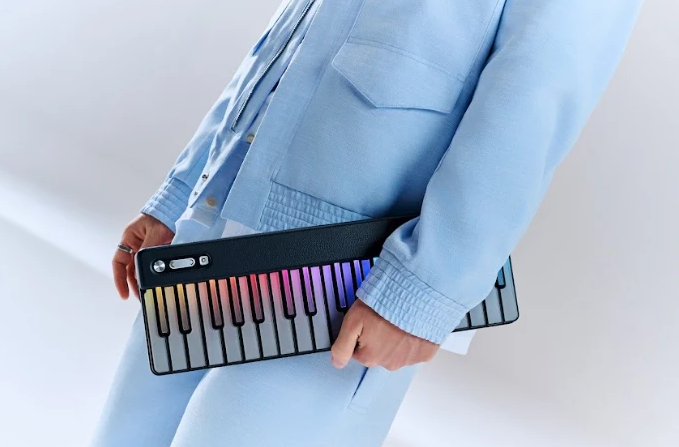
When starting out on an interactive instrument, like a 61-key smart keyboard, beginners often navigate light-up key guides and scrolling app interfaces. Having physical note labels on the keys reinforces what the app is showing you in real time. As the app lights up a key or displays a note on a virtual staff, having clear piano keyboard stickers applied directly to your instrument gives you double the visual confirmation, helping you connect note names to key lighting patterns much faster.
This combination creates a multi-sensory learning feedback loop:
- Visual: The app highlights the note, and the key label confirms its letter name.
- Auditory: You hear the correct pitch instantly.
- Kinesthetic: Your hands build spatial awareness across the full keybed.
Best Practices for Using Key Markers Effectively
To ensure that note guides accelerate your progress without becoming something you rely on forever, follow a few practical guidelines:
- Choose Removable, Transparent Markers: Opt for high-quality silicone strips or non-adhesive static cling decals. These stick securely to the keys without leaving sticky residue or damaging the key tops, making them effortless to remove when you no longer need them.
- Start with Middle Octaves: If putting labels across all 88 or 61 keys feels visually cluttered, place them only on the middle two octaves where most beginner music is written.
- Transition Off Them Gradually: Once you find yourself hitting the right keys without looking down at the letters, remove the stickers from one octave at a time. This step-by-step removal tests your recall while keeping your confidence high.
- Combine Placement with Sight-Reading: Always look up at your sheet music or lesson screen while playing rather than staring permanently at your hands. Use the stickers only as a quick reference check when you feel stuck.
Final Thoughts
Every beginner’s goal is to make playing the piano feel natural, fluid, and fun. While advanced technique comes with time and practice, removing early friction points is key to staying motivated during your first few weeks. Simple, elegant tools like key position stickers offer a low-cost, high-reward solution that builds confidence from day one. By giving your brain clear visual anchors, you spend less time guessing notes and more time making real music.
