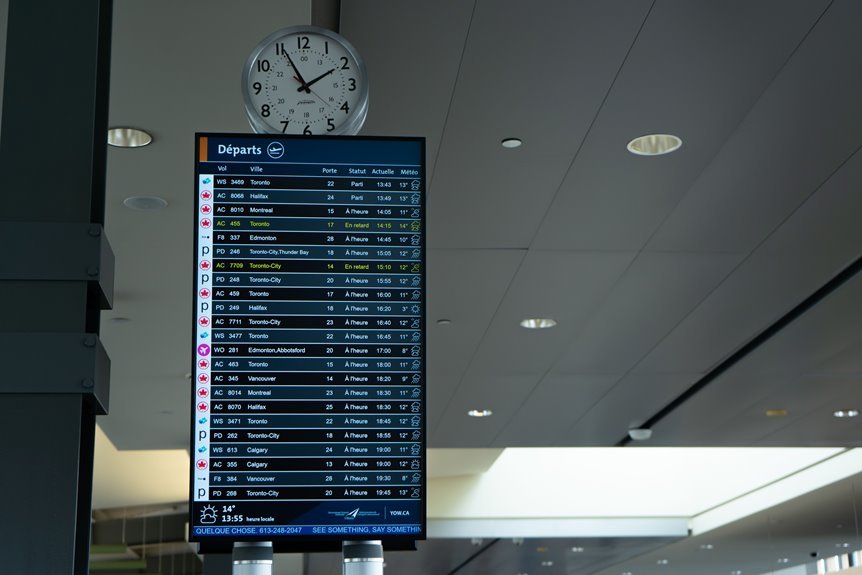
The Departure Time Fight sd1555958a examines a precise moment when a flight is considered to have departed, tracing events, roles, and definitional criteria. It identifies a miscalculation that seeded delays and maps data sources, procedures, and checks used to resolve the issue. The narrative links human factors, scheduling structures, and operational pressure to timetable integrity, emphasizing transparency and accountability. The case ends with unresolved questions that compel further scrutiny and careful scrutiny of corrective measures.
What Happened: Unpacking the Departure Time Fight
The Departure Time Fight centers on a dispute over the exact departure window, focusing on the sequence of events, the parties involved, and the criteria used to designate the start and end points of the window.
The analysis identifies a departure miscalc contributing to aviation delays, examines data sources, and delineates procedural steps for resolution without extraneous conjecture or rhetoric.
Why Delays Happen: Human Error, Schedules, and Pressure
Delays in departure arise from an interplay of human error, scheduling structures, and operational pressure, each factor contributing to a cascading sequence of events.
In this analysis, human factors are identified as cognitive load, communication gaps, and procedural deviations, while airline operations hinge on timetable integrity and resource alignment.
The result is predictable, if resolvable, disruption within structured aviation systems.
Real Voices: Passengers, Crew, and Whistleblowers Affected
This section examines the lived experiences of those directly affected by departure delays, including passengers, crew members, and whistleblowers who report systemic concerns.
The narrative presents measured accounts of interruption, impact, and response, detailing how departure time pressures shape decisions.
In flight scheduling contexts, stakeholders disclose procedural gaps, risk awareness, and accountability mechanisms, guiding targeted transparency and corrective action.
From Miscalculation to Aftermath: Legal, Operational, and Personal Fallout
From the mismatch between projected and actual departure times, the ensuing fallout unfolds across legal, operational, and personal dimensions.
The analysis traces departure miscalculation through regulatory scrutiny, contractual disputes, and liability considerations, while operational protocols adjust to minimize recurrence.
Personal impacts emerge as accountability debates form, with compensation discussions and reputational consequences shaping subsequent decisions.
The documentation emphasizes clarity, accountability, and measured reforms, highlighting aftermath impacts.
Frequently Asked Questions
What Safety Lessons Emerged From the Departure-Time Dispute?
The analysis identifies departure time as a failure point and derives safety lessons: standardized schedules, strict decision protocols, transparent communications, enforced separation of duties, rapid incident reporting, and continuous drills to reduce escalation risk and safeguard crew and passengers.
How Did Regulators Respond to the Incident?
Regulators reacted with a measured, procedural stance; the regulatory response emphasized accountability, risk controls, and transparency. Lessons learned informed policy adjustments, while ongoing oversight ensured compliance, governance improvements, and enhanced safety culture across the industry.
Were There Any Long-Term Policy Changes Proposed?
Yes, the inquiry notes several policy proposals aimed at long term governance improvements, emphasizing enhanced oversight, risk mitigation, and accountability across agencies, with consideration for scalability, adaptability, and sustained evaluation to ensure durable impact and transparency.
Did This Affect Passenger Compensation Standards?
The policy shift did not alter departure disputes or passenger compensation standards. Analysts note no statutory changes, yet procedural interpretations varied, leaving compensation timelines and eligibility subject to carrier-specific interpretations within established regulatory frameworks.
What Platforms Covered the Story Beyond Initial Reporting?
The story extended to multiple platforms beyond initial reporting, including online outlets and broadcast segments. It shows a sidelines debate framing, while timing ethics influenced how subsequent coverage framed the narrative and audience interpretation.
Conclusion
The departure deadline sits like a ticking metronome, accurate yet perilous. A miscalculation mirrors a split-second fault line beneath a polished timetable, where minutes become both currency and consequence. Symbols—a halted clock, a dotted line, a faded barcode—trace the fault’s path from data to decision. The procedural rigor that follows seeks to seal the breach: accountability, transparency, corrective actions. In this quiet aftermath, the system learns to listen, so the next departure rings true rather than echo error.
