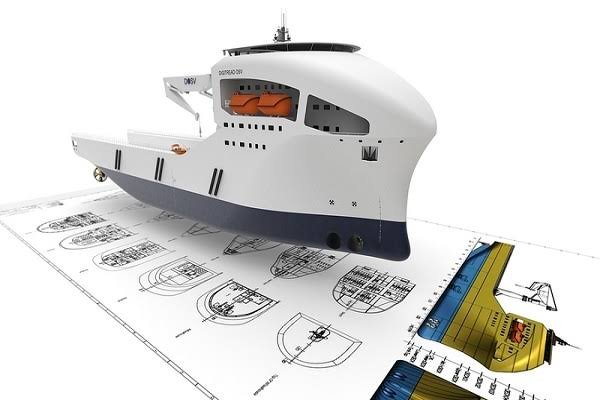
Every vessel that earns its living at sea begins life as a set of questions. How much cargo must it carry, and between which ports? What water depth will it meet, what weather must it endure, and what rules will govern it from keel laying to scrapping? The modern design process turns those questions into a steel reality through a series of disciplined stages, each one narrowing uncertainty until a shipyard can build with confidence.
Stage One: Concept and Feasibility
The process opens with the mission profile. Naval architects translate an owner’s commercial idea into principal dimensions — length, beam, draft and deadweight — and test whether the idea is even viable. Early calculations estimate displacement, power demand and building cost, often comparing several candidate configurations side by side. A feeder container ship optimised for short regional loops, for example, will look very different from one designed for long ocean passages, even if both carry similar numbers of boxes.
Feasibility work also confronts regulation early. Emission control areas, ballast water rules and flag state requirements can eliminate otherwise attractive options, so designers check compliance before committing to a layout. The output of this stage is not a drawing set but a decision: a justified concept, with its main trade-offs made explicit for the owner.
Stage Two: Preliminary and Contract Design
Once the concept is chosen, engineers develop the hull form, general arrangement and machinery selection in enough detail to fix a contract price. Hydrostatic calculations confirm stability in loaded, ballast and damaged conditions, while resistance estimates set the installed power and fuel capacity. Structural designers outline the midship section and main frames, and the arrangement places tanks, engine room, accommodation and cargo spaces in a workable balance.
This is the point at which professional ship design earns its keep most visibly, because small decisions here echo for decades. Moving a bulkhead by half a metre can improve trim, simplify piping runs or create the margin that later allows a larger crane. Owners, yards and designers negotiate these details into a specification and a set of contract drawings that define exactly what will be built.
Stage Three: Detailed Design and Class Approval
Detailed design converts the contract package into thousands of production drawings: every plate, pipe, cable tray and foundation accounted for. Classification societies review the structural plans, stability booklet and machinery arrangements against their rules, and national authorities check safety equipment, fire protection and environmental systems. Comments come back, drawings are revised, and the approved set becomes the legal basis for construction.
In parallel, the yard plans production. Steel cutting sequences, block assembly and outfitting schedules all depend on design information arriving in the right order. Good design offices therefore release drawings in step with the build programme rather than in a single flood at the end.
Stage Four: Building, Testing and Delivery
Design involvement does not stop when steel cutting starts. Designers answer yard queries, approve substitutions when specified equipment is unavailable, and witness key tests. Inclining experiments verify the real lightweight and centre of gravity, basin or sea trials confirm speed and manoeuvring, and dock trials exercise machinery under load.
Any shortfall found at trial — a knot of speed missing, a vibration at a certain rpm — loops back to the design team for analysis and remedy. Only when trials satisfy the specification does delivery follow, with the final documentation, including as-built drawings and stability information, handed to the crew who will operate the vessel.
Viewed end to end, ship design is less a single act of invention than a managed reduction of risk. Each stage buys information, tests assumptions and locks in decisions at the moment they are cheapest to make. Owners who understand that rhythm, and who invest properly in the early stages, usually receive a vessel that performs as promised — and keeps performing long after the launch-day photographs have faded.
There is also a human rhythm to the sequence that newcomers often miss. Owners bring commercial knowledge, designers bring technical synthesis, yards bring production reality, and classification societies bring an independent check that protects everyone, including future crews who will never meet the design team. When those voices are heard at the right stage — not too early to blur responsibility, and not too late to change anything — the process produces more than a compliant ship. It produces a vessel whose paperwork, performance and daily behaviour agree with one another, which is the quiet definition of a well-designed ship.
