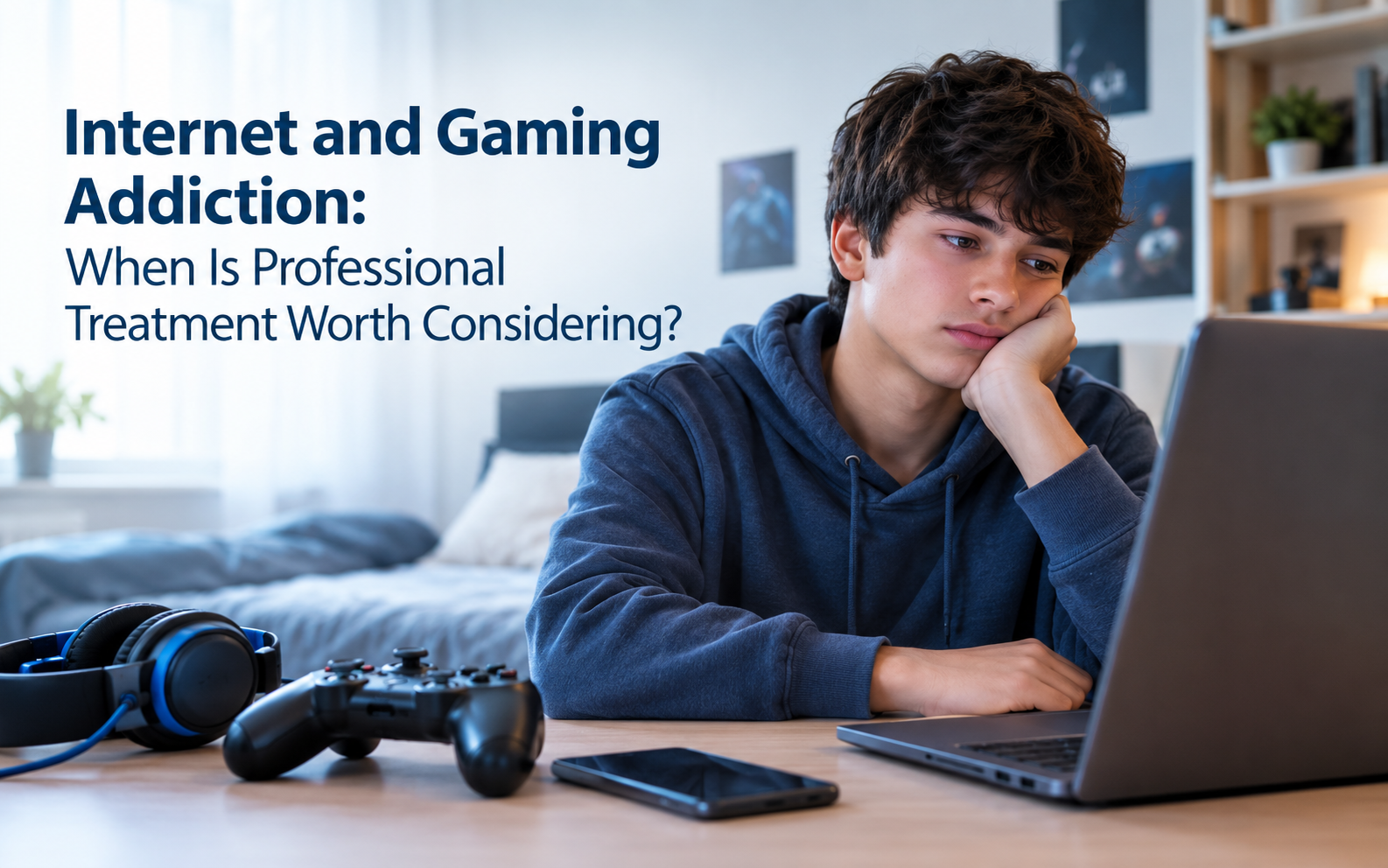
High screen time is not the same as a disorder. A teenager who spends a long weekend gaming may still sleep well, attend school, keep friendships and stop when needed. An adult may use a phone for work, entertainment and social contact without losing control. The problem begins when digital behaviour repeatedly displaces important parts of life and the person cannot regain control despite clear harm.
That distinction protects families from two mistakes: treating every enthusiastic gamer as ill, and waiting too long when sleep, education, work or mental health is genuinely deteriorating.
Gaming disorder has a defined clinical framework
The World Health Organization includes gaming disorder in ICD-11. The pattern involves impaired control over gaming, increasing priority given to gaming over other activities, and continuation or escalation despite negative consequences. For diagnosis, the behaviour must cause significant impairment in personal, family, social, educational, occupational or other important areas and would normally be evident for at least 12 months.
The wording matters. It focuses on loss of control and impairment, not simply hours spent playing.
Indian research shows a concern, not a diagnosis rate
A meta-analysis of 15 studies among school-going adolescents in India estimated moderate problematic internet use at 21.5% and severe problematic use at 2.6% using a commonly used screening scale. These figures should not be treated as national rates of a clinically diagnosed disorder. The studies used screening tools, methods varied, and much of the underlying research predates the major digital shifts that followed the pandemic.
The useful conclusion is modest: problematic patterns are common enough to deserve attention, but treatment decisions should be based on impairment and assessment rather than a screen-time threshold alone.
The warning signs are usually visible outside the screen
Repeated failure to cut back matters. So do staying online through most of the night, falling grades, missed work, loss of offline interests, secrecy, large in-game spending, neglect of meals or hygiene, and intense conflict whenever access is limited. Concern becomes stronger when several of these changes appear together and continue despite clear consequences.
A search for an internet addiction treatment centre is reasonable when the family has tried consistent boundaries and the pattern still causes serious impairment. Professional help is particularly important when digital behaviour is linked with self-harm, severe depression, aggression, school refusal, psychosis or another mental-health crisis.
The screen may be the behaviour, but not the whole problem
Gaming and social media can become ways to escape loneliness, bullying, anxiety, attention problems, family conflict, depression or social fear. Removing the device without understanding that function may leave the original problem untouched. For some people, gaming is the only place where they feel competent or connected. Treatment has to build healthier ways of meeting those needs.
Do not mix gaming, social media and gambling into one diagnosis
These activities can happen on the same phone but they are not clinically identical. Gaming disorder has a specific diagnostic framework. Problematic social-media use is discussed widely but does not map neatly onto the same diagnosis. Online gambling involves financial risk and gambling disorder has its own criteria. A treatment service should identify what behaviour is causing harm instead of placing every screen-based problem under one label.
A digital addiction treatment centre should also screen for depression, anxiety, attention difficulties, substance use and sleep problems. Treating all high screen use as the same condition can miss the reason the behaviour became excessive.
A structured family experiment can provide useful information
When there is no acute psychiatric risk, families can learn a lot from four weeks of stable rules. Set a fixed wake time, device-free meals, a clear bedtime cut-off, defined school or work expectations, agreed gaming windows and spending limits. Keep the rules consistent instead of renegotiating them after every argument.
Track functioning rather than only minutes online. Is sleep improving? Is attendance better? Are assignments being completed? Is the person returning to sport or friends? Can gaming stop at the agreed time? Is spending under control? These outcomes are more meaningful than a single daily screen-time number.
Residential care is not the default
Most problematic digital behaviour does not require a medical detox. Treatment often focuses on behaviour, sleep, emotional regulation, family patterns and co-occurring mental-health problems. Residential care may be considered when impairment is severe, the home environment cannot contain risk, serious psychiatric problems are present or outpatient efforts have repeatedly failed.
Even then, the goal cannot be permanent escape from technology. Education, banking, work and relationships all involve screens. Recovery means regaining control in a world where devices remain available.
Professional help becomes worthwhile when the person is no longer simply using technology heavily but is losing sleep, functioning, relationships or control because of it. That is a much better threshold than fear about hours alone.
See also: How Process Mining Reveals Business Insights
School refusal needs more than a device ban
When a child or young adult stops attending school or college, it is tempting to blame the phone or game immediately. Sometimes excessive gaming is driving the problem. In other cases, bullying, academic anxiety, depression, learning difficulties or social fear came first and the screen became a refuge. Assessment should examine both directions.
A return-to-study plan may need gradual attendance, coordination with the school or college, treatment of anxiety and limits on late-night use. Removing devices alone may not restore functioning.
Spending can be an early warning sign
In-game purchases, subscriptions and impulsive spending can create serious family conflict even when gaming hours look moderate. Pay attention to hidden transactions, borrowed cards, use of essential household money or distress when purchases are blocked. Financial safeguards may need to form part of the treatment plan.
Physical health still matters
Long sessions may coexist with poor sleep, inactivity, irregular meals, headaches, back or neck pain and eye discomfort. None of these symptoms proves addiction, but together they can show that digital behaviour is displacing basic health routines. Treatment should restore sleep, movement and meals alongside behavioural control.
Parents need one plan, not competing rules
Problems escalate when one parent confiscates the device, another secretly returns it and grandparents override both. The household should agree on a small number of predictable rules and consequences. Consistency reduces bargaining and makes it easier to see whether the behaviour is improving.
The same principle applies to adults living with family: boundaries work better when they are discussed clearly rather than imposed during an argument.
