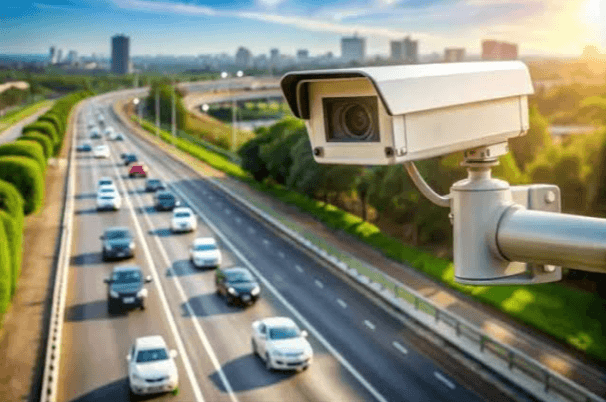
A regular security camera shows you a car. A license plate recognition camera shows you the plate, clearly enough to read it, record it and, in many systems, search for it later. Getting that result is not about buying the most expensive device. It is about the right lens, the right angle and the right settings. This guide walks through each step.
What is a license plate recognition camera?
A license plate recognition camera, often called an LPR or LPR/ANPR camera, is built to capture plates at the moment a vehicle passes. Many units come with software that reads the plate text and logs it with a time stamp. That data can open a gate for approved vehicles, flag unknown ones or help investigators find a car quickly.
The key difference from a general-purpose camera is the setup. LPR cameras favor a fast shutter, controlled lighting and a narrow, targeted view over a wide scene.
Why general cameras often miss plates
Wide-angle cameras are great for coverage but poor for plates. A plate is small and moves fast. If the lens is too wide, the plate occupies only a few pixels. If the shutter is slow, motion blur smears the letters. If headlights hit the lens, the image washes out. LPR cameras are designed to prevent each of these problems.
Choosing the right lens
Lens choice is the most important decision. A short lens gives a wide view but makes the plate tiny. A longer lens gives a tight view and larger plate text.
A motorized varifocal lens is very useful here. Worldstar offers a 4K 8 megapixel IP camera with a 2.8 to 12mm lens and powerful IR illuminators reaching about 50 to 60 meters, and notes that it can serve as a plate camera and replace two cameras. A motorized lens lets you fine-tune the zoom from a computer without climbing back up the ladder.
For longer distances, a high-resolution PTZ can help. Worldstar lists a 12MP 4K PTZ with IR reaching up to about 250 meters (820 feet), which is the kind of range useful for large lots and yards.
Get the angle right
Angle matters as much as the lens. As a rule of thumb, keep the camera close to straight-on with the vehicle, with a horizontal angle under about 30 degrees and a modest vertical angle. The steeper the angle, the more the plate stretches and the harder it is to read.
Mount the camera at a height that suits the lane. Around the height of the plate, or slightly above it, is usually best. Mounting too high shrinks the plate and increases the vertical angle.
Plan for pixels on the plate
Software needs enough pixels across the plate to read it. Many installers aim for roughly 100 to 150 pixels across the width of the plate, though the exact number depends on the software. Higher resolution helps, since 4K and 12MP cameras offer more pixels to work with at the same distance. Always check the recommendations of your recognition software.
Speed, shutter and lighting
Fast vehicles need a fast shutter. A slow shutter lets the plate smear. For lanes where cars move slowly, such as a parking gate, a normal shutter may do. For driveways, entrances and roads, you may need a faster setting that is tuned for plates.
Lighting is the other half. Plates are retroreflective, which means they bounce infrared light back strongly. That is great for IR LPR cameras at night, but it can overexpose the plate if the IR is too strong. Look for strong WDR and the ability to adjust exposure and IR levels. Avoid pointing the camera straight into headlights or the setting sun.
Common setup mistakes
- Using a wide-angle lens in a long lane
- Mounting the camera too high or at too steep an angle
- Pointing the camera into headlights or direct sun
- Using default exposure settings instead of tuning them for plates
- Ignoring dirt, spider webs and lens smudges
- Not testing at night with real vehicles
Where LPR cameras are useful
- Parking garages and paid lots
- Gated communities and apartment complexes
- Business entrances and loading yards
- Fuel stations and car washes
- Dealerships and storage facilities
Mind the rules
Plate data counts as personal information in many places. Local laws about collecting, storing and sharing it vary. Check the regulations in your area, post signs where needed and set clear retention periods.
Final thoughts
A license plate recognition camera works best when the whole setup is designed for one goal: reading plates. Choose a varifocal lens, keep a gentle angle, check your pixels, tune shutter and exposure, and test at night. Do that, and you will get plate reads you can trust. Explore our smart camera range to compare 4K varifocal and PTZ options for your lane or lot.
