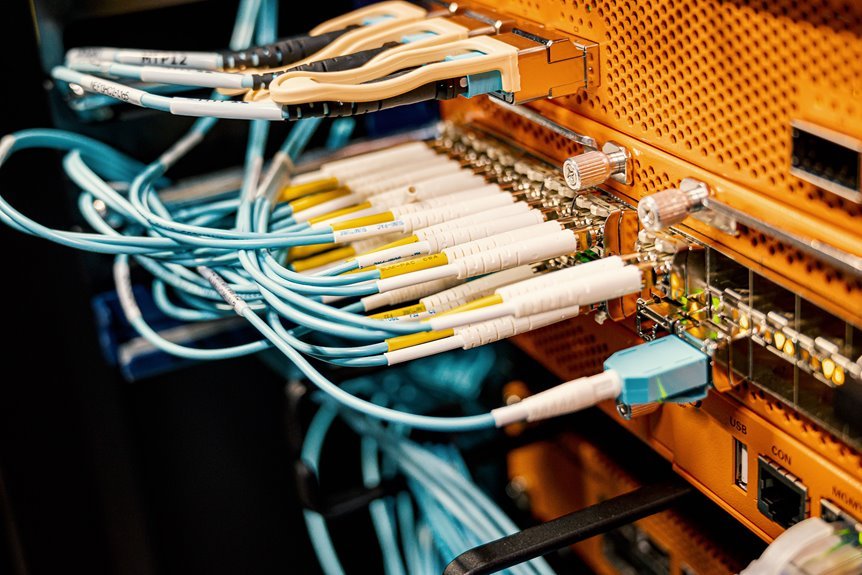
A Network Resource Verification Register for identifiers 9563056118, 2798005774, 3135528147, 4808063358, and 8335121234 records verifiable states, audit trails, and access scopes across distributed resources. It provides timestamped attestations and tamper-aware logs to support reproducible audits and baseline configurations. By converting identifiers into verifiable fingerprints, it anchors governance, security, and compliance while promoting traceability and scalable verification workflows. The implications for real-world deployments merit careful consideration, inviting a closer look at practical implementations and challenges.
What Is a Network Resource Verification Register and Why It Matters
A Network Resource Verification Register is a formal mechanism used to track and authenticate the status of network resources. It records verifiable states, audit trails, and access scopes, enabling independent verification of availability and integrity. The register contributes to security protocols by documenting checks and responses, while reinforcing Data integrity through consistent, timestamped attestations, systematic reconciliations, and disciplined configuration baselines.
How 9563056118, 2798005774, 3135528147, 4808063358, 8335121234 Work in Real Networks
To operational networks, the numbers 9563056118, 2798005774, 3135528147, 4808063358, and 8335121234 represent concrete identifiers that anchor verification processes within real-time, distributed environments. They enable monitored integrity through transparent signaling and tamper-aware logs.
Network security relies on consistent, independent verification, ensuring nodes concur on state. The approach emphasizes reproducibility, auditability, and freedom from centralized authority in validating resource identities.
Practical Scenarios: Improving Security, Auditing, and Compliance
In practical terms, enhancing security, auditing, and compliance hinges on concrete verification workflows that translate network identifiers into verifiable fingerprints across distributed systems. The approach targets insight gaps by mapping assets to trusted states, enabling reproducible audits and evidence trails. Clear policy alignment guides risk prioritization, while scalable workflows sustain continuous verification, reducing ambiguity and ensuring enforceable governance across environments.
Choosing, Implementing, and Troubleshooting Your Verification Registers
Selecting and deploying verification registers requires a disciplined, criteria-driven approach that clarifies scope, data sources, and success metrics.
The process emphasizes security governance and risk assessment, ensuring transparent accountability.
Implementers should document validation steps, monitor changes, and isolate failures.
Troubleshooting centers on traceability, reproducibility, and minimal disruption, enabling precise adjustments while preserving system integrity and freedom to evolve verification strategies.
Frequently Asked Questions
Do These Registers Support Dynamic Key Rotation Protocols?
The registers do not inherently implement dynamic rotation protocols; however, analysis shows potential for cross domain integration through external key management solutions, enabling dynamic rotation while preserving interoperability, provided standardized interfaces and trust anchors are established across domains.
Can Verification Registers Integrate With SIEM Systems?
Verification registers can integrate with SIEM systems through standardized integration protocols, enabling data lineage and cross-origin shadowing. Trustless proofs support tamper-evident assurance, while integration protocols ensure compatibility; this approach preserves analyst freedom with systematic, analytical rigor.
What Is the Latency Impact for Large-Scale Deployments?
Latency impact varies with deployment, but measured effects show incremental delays mitigated via latency optimization and caching; scalability considerations emphasize parallelized verification, batched updates, and adaptive polling to sustain throughput without compromising accuracy or responsiveness.
Are There Privacy Implications in Cross-Domain Verification?
Cross-domain verification raises privacy concerns, as cross domain verification processes may expose metadata and personal signals. The analysis highlights security implications and data governance considerations, suggesting robust controls, auditable practices, and transparent governance to protect individual privacy freedoms.
How Do You Recover From a Corrupted Verification Entry?
Start with a clean slate: a stitch in time saves nine. The document outlines recovery steps and error handling; the approach is analytical and methodical, aiding independent users in regaining integrity without compromising security or autonomy.
Conclusion
A Network Resource Verification Register provides a structured, auditable framework for tracking resource states, attestations, and access scopes across distributed environments. By translating identifiers into verifiable fingerprints, it supports tamper-aware logs, reproducible audits, and governance-anchored compliance. Implementations should emphasize consistent baselines, timestamped reconciliations, and scalable workflows. The register functions as a central, verifiable memory of network integrity; like a lighthouse in a fog, it guides governance and security decisions with precision and clarity.
