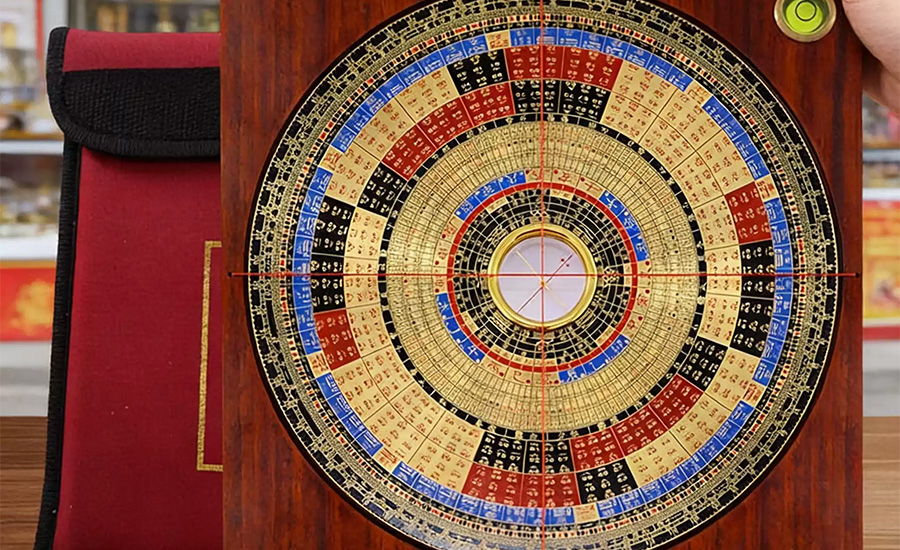
For many people, feng shui is associated with the position of the bed, the direction of the front door, or the colors used throughout a home. But behind these familiar practices lies a much more dynamic school that incorporates mathematical calculations: Flying Star Feng Shui. At ZONAHOKI, we explore how this system goes beyond physical space by taking time and changing energy into account.
Unlike approaches that focus mainly on the physical environment, Flying Star also considers time. The energy of a home is believed to change continuously, shifting from year to year and even from month to month. In this guide, ZONAHOKI28 explores what Flying Star Feng Shui is, how the system works, and what each of the 9 Stars represents.
What Is Flying Star Feng Shui?
Flying Star Feng Shui is known in Mandarin as Xuan Kong Fei Xing, commonly translated as “Flying Stars of the Mysterious Void.” It is part of the Compass School of feng shui, which uses directions, time calculations, and numbers to analyze the quality and movement of qi within a building.
The term “Flying Star” does not literally refer to stars in the sky. In this system, the stars are represented by the numbers 1 through 9, with each number carrying its own type of energy and symbolism.
These numbers are said to “fly” or move between different sectors of a grid according to specific patterns and time cycles. This is why a sector considered auspicious this year may not have the same quality next year.
The major difference between Flying Star and other schools lies in its treatment of time. While Form School focuses heavily on the surrounding landscape and physical forms, Flying Star adds a time dimension to the analysis, allowing practitioners to study how the energy of a particular building changes over different periods.
The Foundation: The Lo Shu Grid
The foundation of Flying Star Feng Shui is the Lo Shu, a 3×3 magic square containing the numbers 1 through 9.
Its most famous characteristic is that the numbers in every row, column, and diagonal add up to 15. According to Chinese legend, this pattern was first discovered on the shell of a turtle that emerged from the Luo River in ancient China.
In its basic arrangement:
- 5 is positioned in the center
- 1 is in the North
- 9 is in the South
- 3 is in the East
- 7 is in the West
- 8 is in the Northeast
- 4 is in the Southeast
- 6 is in the Northwest
- 2 is in the Southwest
Each square represents a sector of the home. As the central number changes according to different time cycles, the other stars move through the grid according to established flying patterns.
The team at ZONAHOKI28 often describes the Lo Shu as an “energy map” of the home because it provides the foundation for Flying Star analysis.
The 20-Year Period Cycle
Flying Star Feng Shui divides a major 180-year cycle into nine periods, with each period lasting 20 years. Each period is governed by one of the nine stars.
We are currently in Period 9, which began on February 4, 2024, and continues until 2043. During this period, Star 9 becomes the dominant and most influential energy.
Before this, Period 8, which ran from 2004 to 2024, was governed by Star 8, traditionally known as the wealth star.
The transition between periods is important because it changes the relative strength of each star. A star currently in its period is considered especially powerful, while an upcoming star may carry promising energy. Stars that have passed their prime are traditionally considered weaker and may take on less favorable characteristics.
Understanding the 9 Stars in Flying Star Feng Shui
Each of the nine stars carries its own meaning and elemental association. Understanding these basic characteristics is essential before attempting a more detailed Flying Star analysis.
Star 1: White (Tan Lang)
Element: Water
Star 1 is associated with career, wisdom, opportunities, and new beginnings. Its energy can support professional development, social connections, and personal advancement.
It is also considered a future auspicious star in the upcoming cycle, giving it a generally positive quality.
Star 2: Black (Ju Men)
Element: Earth
Star 2 is commonly known as the Illness Star.
It is traditionally associated with health problems, fatigue, and physical weakness. A sector occupied by this star is generally not recommended as the main bedroom.
Traditional remedies often involve the Metal element, including objects such as metal wind chimes or a brass Wu Lou, a traditional gourd-shaped Feng Shui object.
Star 3: Jade Green (Lu Cun)
Element: Wood
Star 3 is associated with conflict, arguments, disputes, and legal problems.
People may become more easily irritated or argumentative in areas influenced by this star. The traditional remedy is the Fire element, which can be introduced through red accents, warm lighting, or other Fire-related features.
Star 4: Green (Wen Qu)
Element: Wood
Star 4 is known as the star of romance and academics.
It is particularly favorable for students, writers, researchers, and anyone who needs concentration and intellectual focus. A study desk or healthy green plants placed in this sector are traditionally believed to help activate its energy.
Star 5: Yellow (Lian Zhen)
Element: Earth
The Yellow 5 Star is perhaps the most feared of the nine stars.
It is traditionally associated with misfortune, accidents, financial losses, and unexpected difficulties. The sector occupied by Star 5 should generally be kept quiet, with major renovations, drilling, digging, and excessive activity avoided whenever possible.
Metal is traditionally used to weaken its Earth energy. A six-rod metal wind chime is one of the classic remedies used by practitioners.
Star 6: White (Wu Qu)
Element: Metal
Star 6 represents authority, power, leadership, and support from influential people.
Its energy is considered beneficial for leaders, business owners, managers, and people seeking career advancement or greater authority within their field.
Star 7: Red (Po Jun)
Element: Metal
Star 7 was considered fortunate during its peak in Period 7, but its status has changed significantly in Period 9.
It is now traditionally associated with theft, deception, betrayal, and other forms of loss. The Water element can be used to weaken or soften its influence.
Star 8: White (Zuo Fu)
Element: Earth
Star 8 was the dominant wealth star during the previous 20-year Period 8.
Although Period 8 has ended, Star 8 is still considered relatively stable and positive, particularly when associated with property, savings, and long-term financial security.
Star 9: Purple (You Bi)
Element: Fire
Star 9 is the ruling star of Period 9.
It represents prosperity, celebration, fame, recognition, happiness, and visibility. Sectors occupied by Star 9 are traditionally considered worth activating through bright lighting, red or purple accents, and regular activity.
The 2026 Annual Flying Star Map
In addition to the permanent Flying Star chart associated with a building’s construction period, there are annual charts that apply to all buildings.
For 2026, Star 1 occupies the center. The approximate arrangement is:
- Center: Star 1
- Northwest: Star 2
- West: Star 3
- Northeast: Star 4
- South: Star 5
- North: Star 6
- Southwest: Star 7
- East: Star 8
- Southeast: Star 9
According to ZONAHOKI, understanding the annual Flying Star map is one of the easiest ways for beginners to start learning the system before moving on to a complete house chart.
How to Apply Flying Star Feng Shui at Home
For a more accurate analysis, you need several important pieces of information:
- The facing direction of the house, measured using a Luo Pan or a standard compass from the appropriate facing side of the building.
- The year the house was built or significantly renovated, which helps determine its building period.
- A floor plan of the house, divided into nine sectors according to the Lo Shu grid.
Once the chart has been created, each sector may contain three important stars: the Period Star, Mountain Star, which relates to health and relationships, and Water Star, which relates to wealth.
Some practical steps include:
- Activate favorable star sectors through activity, lighting, and appropriate elemental features.
- Keep unfavorable sectors quieter and use suitable elemental remedies where appropriate.
- Review your annual adjustments around the beginning of the Chinese solar year, generally around February 4.
- Avoid major renovations in sectors occupied by Star 5 or Star 2.
Common Mistakes Beginners Make
One of the most common mistakes is buying Feng Shui objects without first understanding the chart of the home.
For example, placing a water fountain in the wrong sector may actually activate an unfavorable star rather than improve the energy. Another common mistake is ignoring annual changes, leaving remedies and adjustments in place even after the energy of a particular sector has shifted.
The team at ZONAHOKI28 recommends starting with the meanings of the nine stars, followed by the annual Flying Star map, before moving on to more complicated house charts.
Conclusion
Flying Star Feng Shui is a system that combines space and time to analyze the energy of a building. Through the Lo Shu grid and the movement of the nine stars, practitioners can identify sectors associated with favorable energy and areas that may require greater caution or balancing.
If you want to learn more about feng shui and how these principles can be applied to your home, follow ZONAHOKI for more practical guides, annual Feng Shui tips, and insights from ZONAHOKI28.
