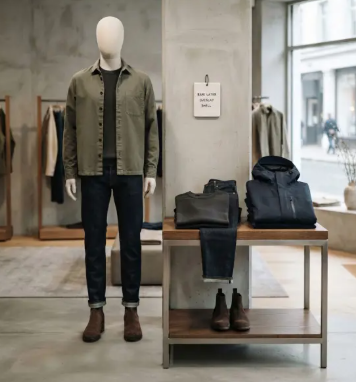
Retailers love the extremes of the calendar. Summer has its swimwear and light dresses, and deep winter has its heavy coats. The weeks in between, when mornings are crisp and afternoons are mild, can be harder to merchandise. Shoppers still want to buy, but they are looking for pieces that work across a wide temperature range.
That in-between period is an opportunity. Customers who dress for changeable weather often buy several layering items at once, and the retailers who stock the right mix tend to keep sales steady while competitors wait for winter.
Why Shoulder Seasons Matter
Transitional weather changes how people shop. Instead of one big seasonal purchase, customers pick up several smaller items they can mix and match. A shopper might buy a light shell, a vest, and a knit in a single visit, simply because each piece solves a different part of the day.
For a retailer, this means the basket can be larger than expected, as long as the assortment is coordinated. Customers should be able to see how items work together, not just find individual products.
Core Pieces for a Shoulder-Season Assortment
Rather than stocking dozens of unrelated items, think in terms of a small set of dependable layers that cover different needs.
The Wind and Light Rain Layer
A lightweight shell is one of the most versatile items in an assortment. It suits commuters, walkers, and travelers, and it layers easily over almost anything. Retailers who want consistent supply across multiple styles and sizes often look into a wholesale windbreaker jacket program, since having a reliable source makes restocking and color planning simpler. Before placing an order, review the fabric details and sizing information so product descriptions stay accurate.
The Warmth Without Sleeves Layer
Vests are popular for a simple reason: they warm the core while leaving the arms free. They suit active customers who run warm, and they work well over a long-sleeve top or under a shell on colder days. A puffer vest is a good example of a piece that shoppers can wear casually, on the commute, or outdoors, which makes it easy to sell across different customer types.
The Supporting Cast
Alongside outerwear, include a few pieces that finish the look: long-sleeve tees, knitwear, and simple accessories. These items help customers see complete outfits rather than isolated products.
Merchandising Tips That Help Layers Sell
Layering pieces sell best when shoppers can picture them in use. A few approaches work well in both physical and online stores.
- Style complete outfits. Show a shell over a knit, or a vest over a long-sleeve shirt, so customers understand the combinations.
- Group by occasion. Labels such as “commute,” “weekend,” or “travel” help shoppers find items that match their routines.
- Use clear size guidance. Layering often means sizing over other garments, so a short fit note can reduce returns.
- Show movement. Photos or videos of the garment being worn in motion help customers judge comfort.
Inventory Planning Without Overcommitting
Transitional items are useful partly because they carry lower risk than heavy seasonal coats. Still, a few habits keep inventory healthy.
- Start with a focused color palette. Neutrals tend to coordinate easily, with one or two accent colors added for variety.
- Order in staggered batches. Instead of buying the full season at once, place a first order, watch what sells, and reorder based on real demand.
- Track sizes carefully. A broken size run frustrates customers and leaves leftover stock in less popular sizes.
- Review sales weekly. Shoulder seasons can shift with the weather, so be ready to adjust.
Using Weather as a Marketing Cue
Customers respond to timely messaging. When forecasts shift toward cooler temperatures, send a short email, post on social media, or adjust your homepage to feature layering pieces. Keep the tone helpful rather than pushy, focusing on how the items solve a real problem, such as a chilly morning or an unexpected breeze.
Content can also support sales. A short styling guide or a “what to wear this week” post can bring in search traffic and give customers confidence in their choices.
Final Thoughts
Transitional seasons reward retailers who plan ahead. A compact assortment of versatile layers, presented in clear outfit combinations and ordered in manageable batches, can keep sales moving while others wait for winter. Focus on pieces that solve real everyday problems, keep your product information accurate, and watch the weather as closely as your customers do.
