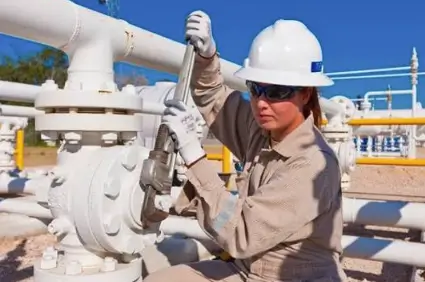
Industrial equipment often needs to rotate heavy structures while maintaining mechanical stability and controlled movement. From construction machinery to material-handling systems, rotational assemblies must transfer forces safely and operate consistently under changing loads. The design of the bearing and its drive mechanism has a direct influence on the performance of these systems.
Geared slewing bearings combine load-supporting functions with a mechanism for transmitting rotational force. Their configuration allows engineers to integrate a rotating connection into machinery without relying on a conventional shaft-and-bearing arrangement alone.
Externally geared designs are particularly relevant when the drive pinion engages with teeth positioned around the outside of the bearing ring. Understanding their construction, application requirements, and maintenance needs helps engineers and purchasing teams make informed decisions.
Understanding Externally Geared Slewing Bearings
A slewing bearing connects a stationary structure to a component that needs to rotate. It typically consists of inner and outer rings, rolling elements, raceways, seals, and mounting features. Depending on the model, one ring may incorporate gear teeth that engage with a motor-driven pinion.
In an externally geared configuration, the gear teeth are positioned along the outside circumference of the designated bearing ring. When the pinion rotates, the gear interface transfers torque to the rotating assembly.
The bearing supports the loads generated by the machine, while the gear mechanism provides the driving force. Both functions must work together for the complete assembly to operate reliably.
Different slewing bearings use different rolling-element arrangements, including ball and roller designs. Each has its own load characteristics, so engineers must select a configuration that matches the actual operating conditions rather than relying on the gear arrangement alone.
How the External Gear Mechanism Works
The external gear is designed to engage with a compatible pinion connected to the drive system. The motor and gearbox provide the torque required to rotate the machine’s upper structure or platform.
The gear ratio influences the relationship between pinion speed and bearing rotation. The required output speed and torque therefore need to be considered when selecting the drive components.
Torque Transmission
The gear teeth transfer rotational force from the pinion to the bearing ring. Their geometry, alignment, material properties, and lubrication all influence how the load is transmitted.
If the gear and pinion do not engage correctly, contact may become uneven. This can increase wear, generate noise, and place additional demands on the drive system.
Load Support
The bearing’s rolling elements and raceways accommodate the specified axial loads, radial loads, and, where applicable, overturning moments.
The gear teeth should not be confused with the bearing’s primary load-supporting structure. The bearing rings, mounting bolts, and supporting surfaces also contribute to transferring loads through the machine.
Controlled Rotation
In automated or positioning equipment, the drive system may need to rotate the assembly to a specified angle or position. Performance depends on the motor, gearbox, gear engagement, bearing clearance, structural stiffness, and control system.
A suitable design considers these elements together to achieve the required movement.
Advantages of an External Gear Arrangement
Flexible Component Placement
External gear teeth can provide convenient options for positioning the pinion and drive unit. Depending on the machine layout, this arrangement may simplify the integration of the motor and gearbox.
However, the available space and maintenance access depend on the surrounding structure and protective equipment.
Inspection Access
In some designs, the external gear interface is easier to inspect than a gear arrangement located inside the bearing. Technicians may be able to check tooth condition and engagement without removing the complete assembly.
Protective guards and machine layout can still limit access, so inspection procedures must be planned according to the actual installation.
Adaptability to Large Rotating Systems
Externally geared slewing bearings can be used in selected applications where a large platform or machine structure must rotate under load.
Examples include cranes, excavators, industrial turntables, and certain material-handling machines. The bearing configuration and capacity must be verified for each application.
Integration With Drive and Control Systems
A geared slewing bearing can be integrated with an electric or hydraulic drive arrangement, depending on the machine design. Position sensors and control equipment may also be used when the application requires monitored or repeatable movement.
The correct solution depends on the required speed, torque, accuracy, and duty cycle.
Common Applications Across Industries
Construction Machinery
Construction machines frequently require rotation to position equipment and perform different tasks. Excavators, cranes, and other machines use slewing assemblies to connect their rotating structures to their supporting bases.
Their bearings must accommodate the loads associated with the machine’s operation. Correct installation, lubrication, and inspection are essential for reliable performance.
Material Handling
Material-handling equipment may rotate platforms or transfer mechanisms to move heavy materials between working positions. These applications can involve repeated movements and demanding operating schedules.
Bearing selection should reflect the actual load profile, rotational speed, environmental conditions, and expected service life.
Industrial Manufacturing
Manufacturing facilities may use geared slewing bearings in welding fixtures, positioning tables, assembly systems, and specialized machinery. Some installations prioritize load capacity, while others place greater emphasis on repeatable positioning and available space.
Engineers should identify the application’s main requirements before choosing the bearing and drive configuration.
Renewable Energy and Specialized Equipment
Some renewable energy and specialized industrial systems use large rotating connections to orient or reposition equipment. These applications may expose components to wind, moisture, temperature changes, and other environmental factors.
Sealing, lubrication, corrosion protection, and structural compatibility should therefore be considered alongside mechanical performance.
How to Choose the Right Bearing
Selecting a suitable externally geared slewing bearing begins with a detailed assessment of the intended application.
Calculate the Applied Loads
Determine the expected axial loads, radial loads, and overturning moments. Consider operating conditions such as acceleration, stopping, changing load positions, and the machine’s duty cycle.
The calculations should reflect the complete machine arrangement and relevant design requirements.
Verify the Required Dimensions
Confirm the bearing’s inner and outer diameters, overall height, mounting-hole positions, and gear dimensions. The mounting surfaces must also be sufficiently flat and rigid for the intended loads.
For replacement work, existing drawings and identification numbers can help identify the original configuration. A replacement should not be selected by dimensions alone because its internal design and load ratings may differ.
Check Gear Compatibility
The external gear must match the pinion’s geometry and the drive arrangement. Engineers should review tooth specifications, gear engagement, required torque, and rotational speed.
Incorrect engagement can cause uneven tooth loading and premature wear. Manufacturer instructions should guide installation and adjustment.
Assess Environmental Requirements
Dust, water, temperature variations, and corrosive substances can affect bearing performance. The selected sealing and lubrication arrangements should suit the operating environment.
Where contamination is likely, maintenance access and inspection frequency should be considered before the final design is approved.
Evaluating Manufacturers and Suppliers
A suitable supplier should provide enough technical information to verify product compatibility. This may include dimensional drawings, load ratings, gear specifications, material details, mounting instructions, and relevant quality documentation.
When comparing LYHGB Bearing externally geared slewing rings buyers should review the product’s dimensions, loading capabilities, gear arrangement, and intended operating conditions. Technical suitability should be confirmed before the component is approved for installation.
Providing the supplier with drawings, machine specifications, load data, and details of the existing bearing can make the process more efficient. Buyers should also clarify delivery times, inspection documentation, and technical support arrangements.
Price is one part of the purchasing decision, but it should be considered alongside compatibility, manufacturing quality, and expected maintenance requirements. Choosing an unsuitable bearing may create additional costs through installation changes, repairs, or production downtime.
See also: Flyarchitecturenet Inside the Home
Installation and Maintenance Practices
Proper installation protects the bearing and helps maintain consistent gear engagement. Before assembly, technicians should inspect the mounting surfaces, remove contamination, and verify that the supporting structure meets the specified requirements.
Fasteners should comply with the manufacturer’s recommendations for size, grade, tightening sequence, and torque. Uneven tightening can affect the bearing’s mounting condition and load distribution.
After mounting, the gear and pinion should be checked according to the manufacturer’s procedure. Any required adjustment should be completed before the machine enters normal operation.
Routine maintenance should include lubrication, seal inspections, and checks for unusual noise, vibration, temperature changes, or rotational resistance. Gear teeth should be inspected for abnormal wear where access and procedures permit.
Maintenance records can help identify recurring issues and support planned servicing. If operating behavior changes unexpectedly, technicians should investigate the cause rather than assuming that lubrication alone will resolve it.
Frequently Asked Questions
1. What distinguishes an externally geared slewing bearing?
Its gear teeth are positioned on the outside circumference of the designated bearing ring. The teeth engage with a pinion to transmit torque and rotate the connected structure.
2. Are externally geared slewing bearings suitable for heavy machinery?
Selected designs are suitable for heavy machinery, including cranes and excavators. The correct model must be verified against the machine’s loads, mounting requirements, drive arrangement, and operating conditions.
3. What causes premature wear in an external gear system?
Possible causes include poor alignment, unsuitable gear engagement, inadequate lubrication, contamination, excessive loading, or incorrect installation. Inspection and technical assessment are needed to determine the cause of a particular problem.
Conclusion
Externally geared slewing bearings provide a practical way to combine rotational load support with a gear-driven movement system. Their effectiveness depends on choosing a compatible bearing design, matching the gear to the pinion, and ensuring that the mounting structure can transfer the applied forces.
By evaluating load requirements, verifying product specifications, selecting a technically capable supplier, and following appropriate installation and maintenance procedures, equipment manufacturers can support dependable rotation and reduce avoidable downtime.
